


- Published on: 2022-03-10 10:36:00
Why Forex Trading Is 80% Psychological
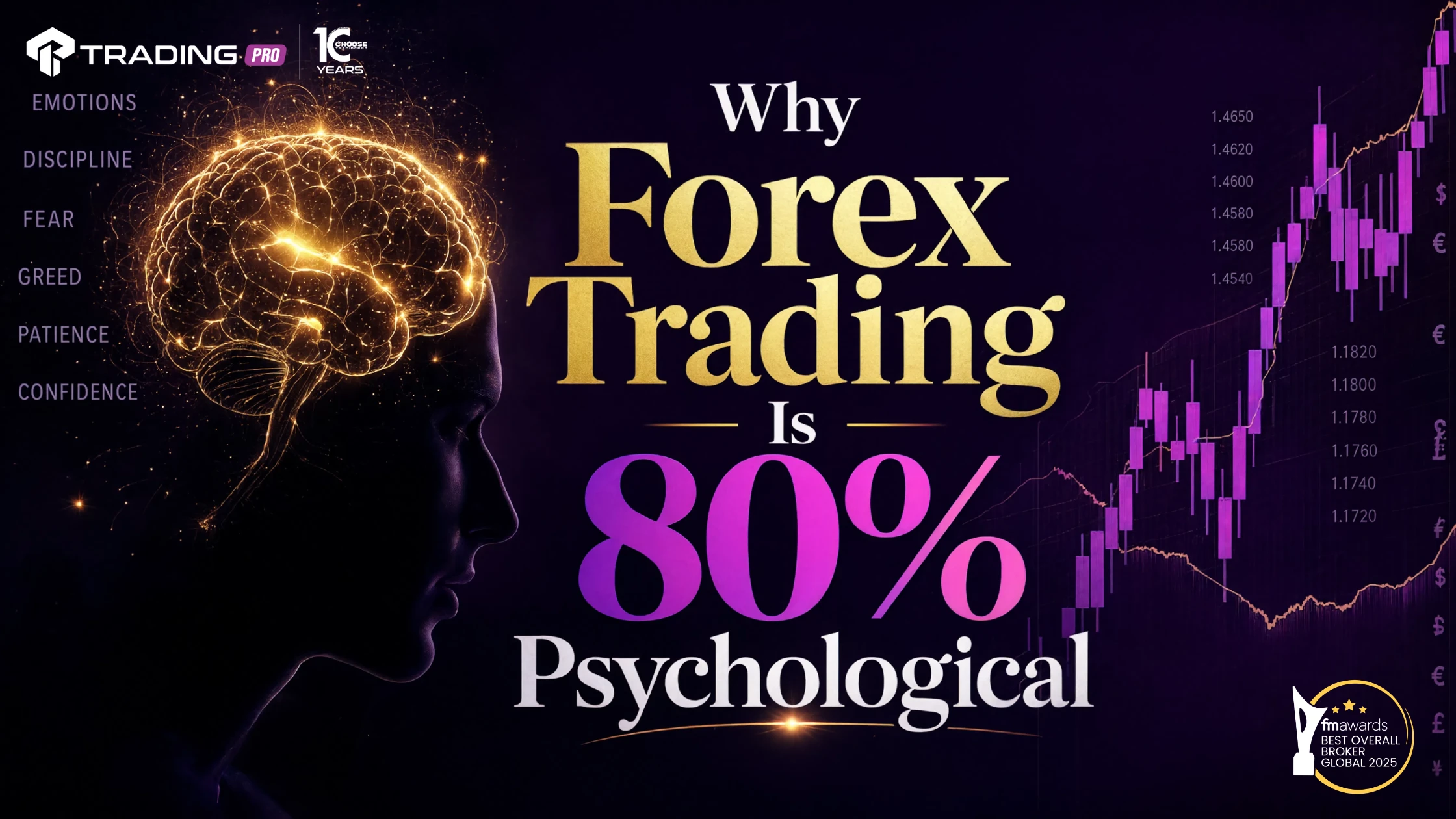
When most people begin their forex trading journey, they believe success depends primarily on finding the right strategy or the most reliable indicator. They invest countless hours searching for a "perfect system" — one that guarantees winning trades and removes uncertainty from the equation. But experienced traders arrive at a very different understanding: forex trading is, above all else, a psychological game.
The widely held view among professionals is that trading is 80% psychology and 20% strategy. Technical analysis and a structured approach matter — but it is your mindset and emotional discipline that ultimately determine whether you succeed or fail over the long run.
The Emotional Nature of Financial Markets
The forex market moves based on human behaviour. Every price movement is the aggregate reflection of decisions made by traders, investors, banks, and institutions operating across the globe. Because real money is involved at every level, emotions are not an occasional intrusion into the decision-making process — they are a permanent and powerful presence within it.
Common emotions traders encounter include:
- Fear of losing money, particularly after a difficult run of trades
- Greed for larger profits than the setup genuinely warrants
- Frustration following losses that feel unjust or avoidable
- Overconfidence after a strong winning streak, creating a false sense of invincibility
- Anxiety during periods of elevated market volatility
When these emotions are left unmanaged, they do not stay in the background. They take over the decision-making process — and the consequences show up directly in trading performance.
Why Strategy Alone Is Never Enough
A well-constructed trading strategy provides genuine clarity around entries, exits, and risk management. But even the most rigorously backtested system will fail if the trader behind it cannot execute it consistently under real market conditions — with real money, real losses, and real emotional pressure.
Consider how often traders:
- Close winning trades too early out of fear that the profit will disappear
- Adjust stop-losses mid-trade to avoid accepting a loss, only to turn a small loss into a large one
- Skip entirely valid setups following a losing streak, robbing themselves of the edge they spent months building
- Increase position sizes after a big win, convinced that momentum will continue indefinitely
None of these decisions come from the strategy. All of them come from emotion overriding structure.
This is why two traders can follow the exact same strategy and produce dramatically different results. One follows the rules with precision and consistency. The other allows emotion to interfere at critical moments. The strategy is identical. Psychology is not.
The Role of Discipline and Consistency
At its core, trading psychology is fundamentally about discipline and consistency — the ability to execute a plan with fidelity regardless of short-term outcomes, market noise, or the emotional discomfort that losses inevitably produce.
Successful traders internalise three truths that allow them to operate this way:
- Losses are a normal and expected cost of doing business in the markets
- Not every trade will be profitable — and that is not a failure of the strategy
- Performance should always be measured across a large sample of trades, never judged on any single outcome
By keeping their focus on the process rather than the result of each individual trade, disciplined traders reduce emotional pressure and consistently make more rational decisions — even in difficult market conditions.
Managing Fear and Greed
Fear and greed are the two most influential emotions in trading, and they operate in direct opposition to sound risk management.
Fear causes traders to exit winning positions before targets are reached, avoid high-quality setups after a run of losses, and reduce position sizes at precisely the moments when their edge is strongest. Greed pushes traders in the opposite direction — overtrading, risking more than their plan dictates, and holding positions far beyond their logical exit points in pursuit of a larger gain.
Managing both requires structure, preparation, and habits that keep emotion out of execution:
- Use fixed risk per trade — remove the temptation to size up or down based on recent results
- Set stop-loss and take-profit levels at the point of entry — decisions made before the trade is live are almost always more rational than those made during it
- Follow your trading plan without deviation — if the plan is sound, trust it
- Keep a detailed trading journal — self-awareness is the foundation of psychological improvement
- Take breaks after emotionally charged trades — stepping away resets your baseline and prevents one bad decision from compounding into several
These habits do not eliminate emotion from trading. They prevent emotion from eliminating discipline from trading.
Building a Strong Trading Mindset
A strong trading mindset is not something that arrives fully formed. It is built over time through experience, repeated discipline, and an honest commitment to self-awareness. The traders who develop it share a common orientation: they are focused on long-term consistency rather than short-term excitement, and they treat trading as a serious business rather than a vehicle for fast money.
They do not chase quick profits or make impulsive decisions driven by frustration or overconfidence. They focus on executing their strategy correctly, protecting their capital, and allowing their edge to compound over time — understanding that the process, executed with consistency, is what produces the results.
The mindset is the strategy. Everything else is detailed.
Final Thoughts
The perfect strategy without the psychological infrastructure to execute it is worthless. Traders who invest as much in developing their mental discipline as they do in refining their technical approach will always have a structural advantage over those who treat psychology as secondary.
Master the mindset. The profits follow.
Your edge is only as strong as your ability to execute it — master the psychology.
Join the TradingPRO community and get access to daily market analysis, trading psychology guides, and strategy breakdowns — completely free.
Facebook | Instagram | Telegram | LinkedIn | Twitter (X)


