




- Published on: 2026-11-17 02:42:00
What Is Revenge Trading? Common Trading Mistakes and How to Manage Them
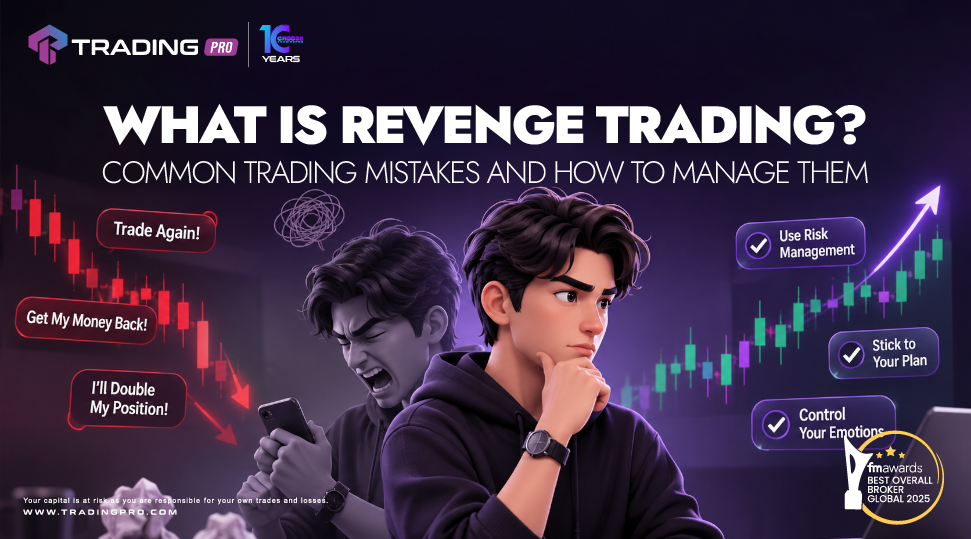
1. What Is Revenge Trading?
Revenge trading happens when a trader makes impulsive decisions after experiencing a loss, often attempting to recover the lost amount through additional positions. Instead of following a structured trading plan, the trader may increase position sizes, enter the market too quickly, or ignore previously established risk limits. In CFD trading, where leverage can magnify both gains and losses, these decisions can increase exposure significantly. Understanding revenge trading is an important step towards developing more disciplined trading habits and making decisions based on analysis rather than frustration.
2. Why Does Revenge Trading Happen?
Trading involves uncertainty, and losses are an unavoidable part of participating in financial markets. However, emotional reactions can influence how traders respond to these outcomes. Frustration, disappointment, and the desire to recover a loss quickly may lead to repeated positions without proper analysis. Market volatility can make this behaviour even more challenging, particularly when prices move rapidly. Recognising these emotional triggers helps traders understand why they may abandon their strategies and why maintaining a consistent approach is essential.
3. Common Trading Mistakes That Lead to Revenge Trading
Several trading mistakes can contribute to revenge trading. These include entering positions without confirmation, increasing exposure after a loss, ignoring Stop Loss levels, and trading without a clear strategy. Another common mistake is treating every market movement as an opportunity, which can result in unnecessary positions. Traders may also overlook the effect of spreads, commissions, and other trading costs when making frequent transactions. Reviewing these habits can help identify weaknesses in a trading approach before they become repeated patterns.
4. How Can Traders Recognise Emotional Decisions?
Recognising emotional decisions begins with observing changes in trading behaviour. Entering positions immediately after a loss, increasing trade sizes unexpectedly, or repeatedly checking the market with the intention of recovering losses may indicate emotional decision-making. Another warning sign is abandoning an established trading plan because of short-term price movements. Keeping a trading journal can help identify these patterns by recording the reasons behind each position, the planned risk, and the outcome. Reviewing this information regularly encourages greater awareness and accountability.
5. How Can Stop Loss Orders Help Manage Risk?
Stop Loss orders are important risk-management tools that allow traders to set a level at which a position should be closed if the market moves against them. They can help traders define potential losses before entering a position and reduce the temptation to keep an unsuccessful position open because of emotional reactions. However, a Stop Loss does not guarantee execution at the exact requested price. During volatile conditions or market gaps, slippage may occur. Traders should therefore understand order execution conditions and consider Stop Loss placement as part of a wider risk-management strategy.
6. The Importance of Position Sizing and Risk Management
Position sizing determines how much market exposure a trader takes on in each position. Choosing an appropriate position size helps keep potential losses within predefined limits and reduces the temptation to increase exposure after an unsuccessful trade. In leveraged CFD trading, even relatively small market movements can have a significant effect on account equity. Traders should consider their available balance, leverage, market volatility, and individual risk tolerance before opening a position. A consistent risk-management approach is more sustainable than attempting to recover losses through larger or more frequent trades.
7. How Can a Trading Plan Prevent Revenge Trading?
A trading plan provides a structured framework for making decisions before entering the market. It can include entry and exit conditions, position-sizing rules, risk limits, and circumstances in which trading should be paused. Having these rules in place makes it easier to evaluate market opportunities objectively rather than reacting to previous outcomes. Understanding the psychological side of decision-making is also important. TradingPRO's Level 6 – Risk Psychology course provides a relevant educational resource for exploring risk psychology and its relationship with trading decisions.
8. The Role of Trading Platforms and Trading Tools
Trading platforms provide access to market information, charting features, and order-management tools that can support a more organised approach. MetaTrader 5, for example, offers charting capabilities and different order types that traders can use when applying their strategies. Traders can explore the MetaTrader 5 platform offered by TradingPRO to learn more about its features. However, using a platform does not eliminate trading risk. Tools should support a clearly defined strategy, while traders remain responsible for their decisions and risk exposure.
9. Building Better Trading Habits and Avoiding Revenge Trading
Avoiding revenge trading requires consistency, patience, and an understanding that individual losses do not determine the outcome of an entire trading journey. Taking a break after an emotional trading session, reviewing previous decisions, and following predefined risk limits can help traders maintain discipline. It is equally important to evaluate performance over time rather than focusing on recovering a single loss. Traders who want to With TradingPRO, traders can explore platforms such as MetaTrader 4 and MetaTrader 5 and review account options according to their trading needs. To learn more about the available platforms and account options, visit the TradingPRO Social Media and website .


